Why the Best Marbella Interiors Are Built Around Natural Materials
Walk into a home on the Costa del Sol that's been designed well and you'll feel it straight away. Something about the space just works. It feels calm, warm, lived-in, even if nobody's moved in yet.
Most of the time, when you look around to work out why, it comes down to the materials.
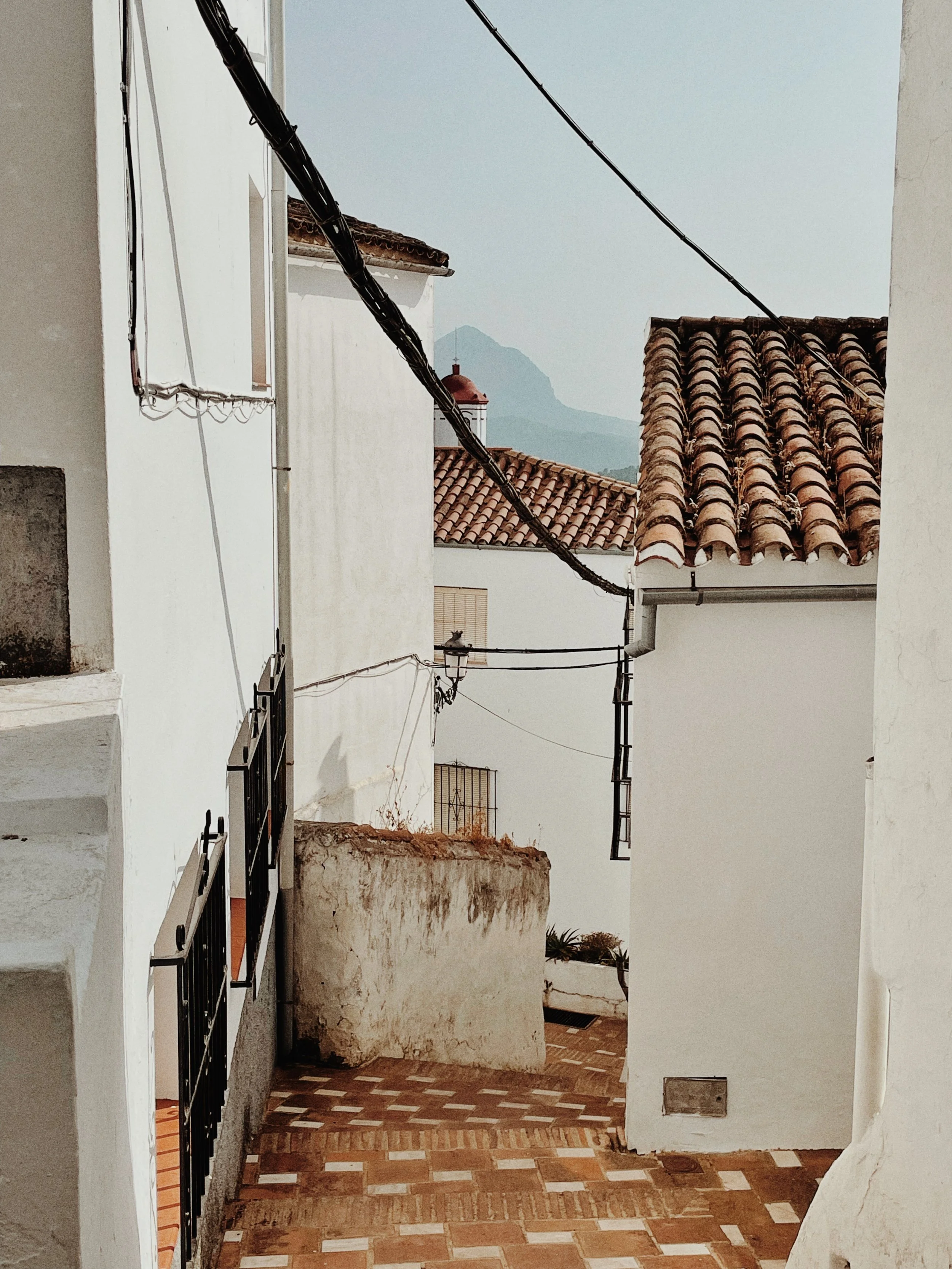
Natural materials have always made sense here. The landscape outside is terracotta rooftops, bleached stone walls, silvery green olive trees. When a home reflects that rather than fights against it, everything clicks into place. What's changed recently is that clients are asking for it more deliberately, and being much clearer about what they don't want.
Why It Works So Well Here
The Costa del Sol is a specific kind of place. The light is strong, the colours outside are warm and earthy, and for most of the year the doors are open and inside and outside blur into one. Cool greys and high-gloss finishes tend to look over done when trying to create that effortless and relaxed look. They fight the light rather than working with it.
Natural materials do the opposite. Terracotta floors absorb heat during the day and release it slowly in the evening. Stone surfaces stay cool in summer. Linen breathes in a way synthetic fabrics never quite manage. These aren't just pretty choices, they make a home more comfortable to actually live in.
There's also the question of how they age. Travertine develops character over time. Oiled timber deepens in colour. These are finishes that look better after ten years than they did on day one, which matters a lot for second homes and investment properties where durability counts just as much as looks.
The Materials Worth Knowing About
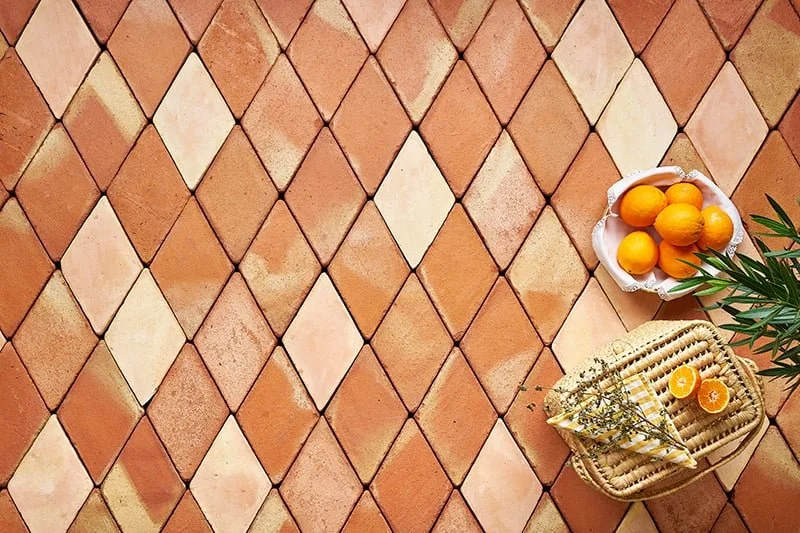
Terracotta is still the foundation of a warm Mediterranean interior, but the way people are using it has shifted. Larger formats, smoother finishes, more unexpected spots - kitchen splashbacks, bathroom floors, feature walls. The warmth is the same. The look feels more current. We used a terracotta floor from Todo Barro in our Pan Bendito project, the perfect addition to the rustic, locally sourced and tactile interior space.
Travertine is firmly back. Its soft, creamy tones and natural veining suit the Andalusian light really well. As flooring, on bathroom walls, or as a kitchen island surface, it brings a quiet kind of luxury that's hard to fake with anything engineered.
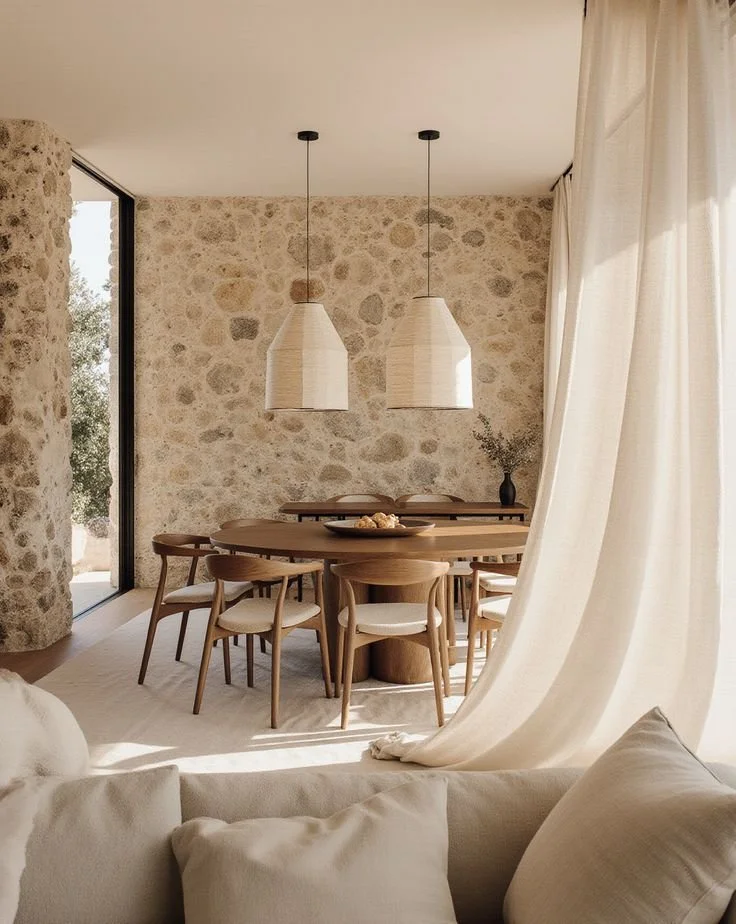
Stone more broadly - limestone, honed marble, textured slate - anchors a scheme in a way little else does. In better Marbella properties, you'll find it used throughout: terraces that flow indoors, stone-clad shower walls, raw stone worktops.
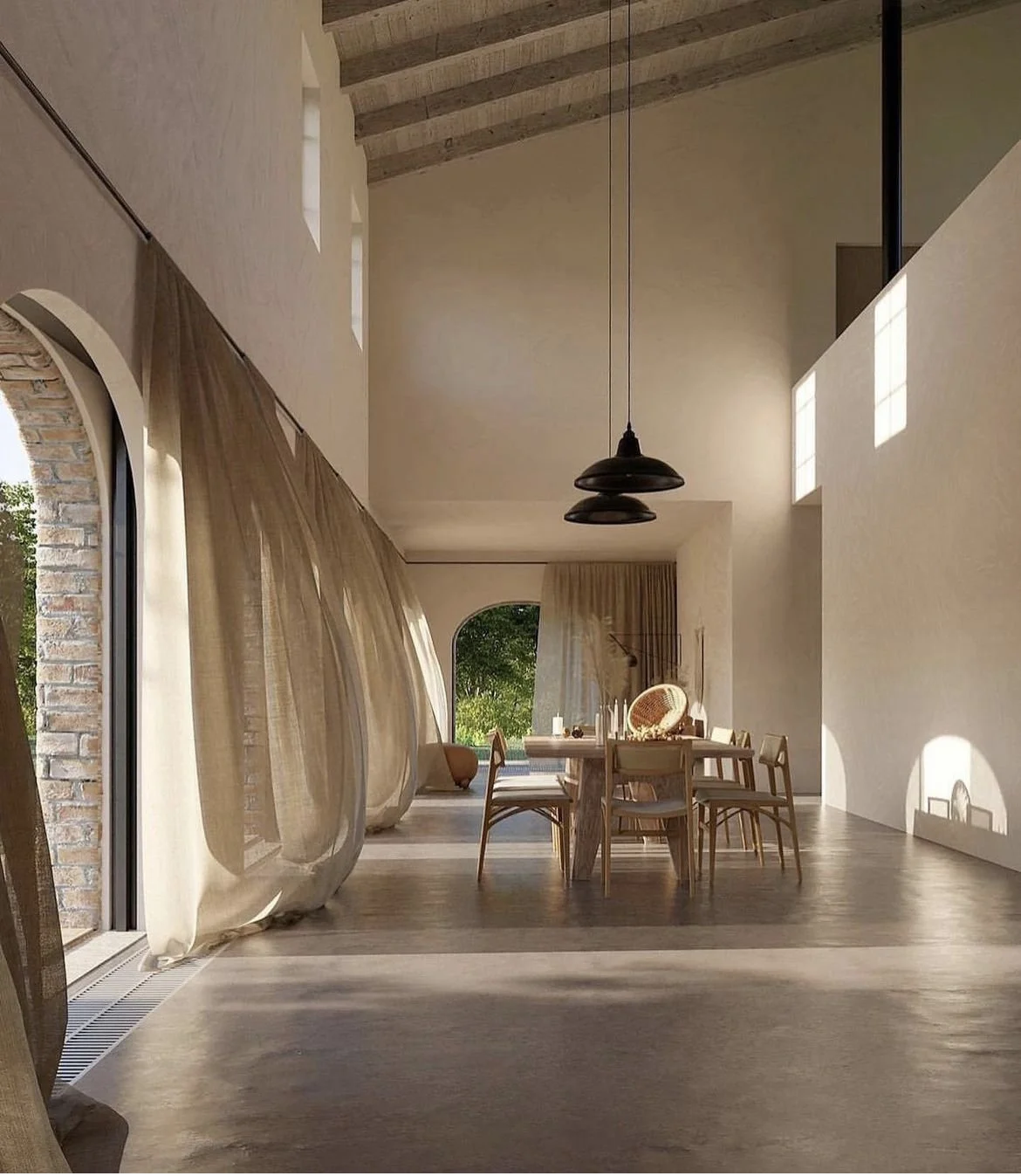
Linen is the fabric equivalent. Loose, a little rumpled, completely unfussy. It suits a warm climate far better than heavy velvets or stiff structured fabrics, and it looks wonderful in strong natural light.
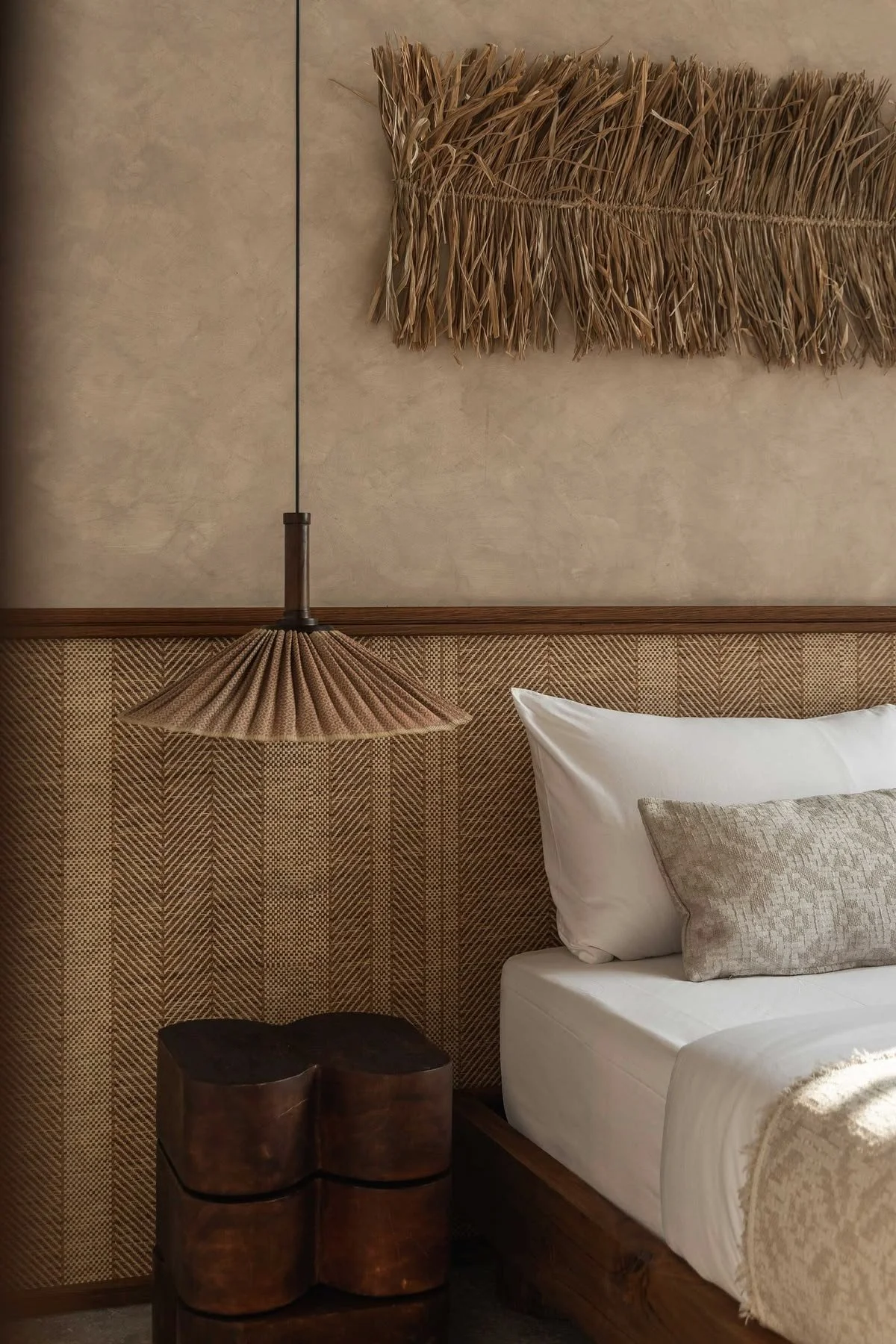
Rattan and natural fibres add texture without adding weight. A rattan pendant, a jute rug, some woven baskets, these are the small details that give a room its layers and stop it feeling too bare.
Timber and oak bring warmth and grain. A solid oak dining table, timber ceiling beams, bespoke cabinetry in a natural finish, wood softens a space and gives it a sense of permanence. In open-plan homes with high ceilings, it often stops the scale from feeling cold.
Limewash and tadelakt plaster are worth a mention of their own. These wall finishes have been used across Andalusia and North Africa for centuries and they're having a real revival right now. Tadelakt in particular (polished, waterproof, with a subtle depth to it) has become a favourite for bathrooms and wet rooms. It's tactile and beautiful and completely at home in this climate.
Getting the Balance Right
The one thing to watch with natural materials is that a space can tip too far, all earthy tones and raw textures with nothing to ground it. The rooms that work best have a bit of contrast built in.
Travertine flooring, limewashed walls, and linen upholstery can be pulled together with some darker timber, aged brass hardware, and a few deep-toned ceramics. Nothing jarring, just enough contrast to give the scheme some definition. It helps to make the space feel put-together without feeling overdone.
Knowing what to leave out is as important as knowing what to include. That's where the real design work happens.
If You're Planning a Project
The shift towards natural materials isn't just something to follow because it's current. It's a genuinely sound approach for homes on the Costa del Sol, they suit the climate, they age well, and they hold their value.
Whether you're renovating a Marbella apartment, refreshing a second home in Sotogrande, or starting from scratch on a new build in Estepona, getting the material palette right early makes everything else simpler.
At Studio Alba we help clients through all of it, from choosing materials and developing the concept through to managing everything on-site. If you're based abroad and can't be here for every decision, we're well used to that. We make it work.
If you'd like to talk through a project, get in touch, we'd love to hear from you.